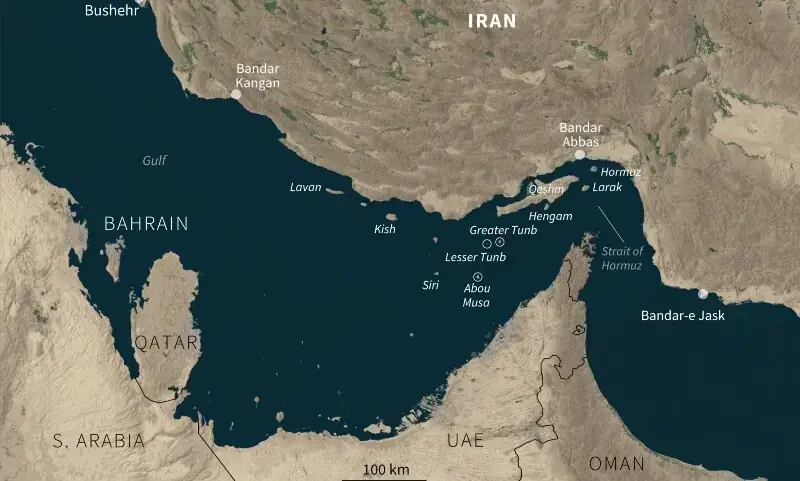
• Trump says Iranian navy ‘obliterated’, threatens to shoot at ships ‘anywhere close to blockade’; claims Iranian officials called him on Monday; reveals talks failed due to nuclear issue• US president says more countries to participate as Nato allies refuse to join Trump in blocking ports; Europeans to mull ‘defensive mission’ at conference• Iran says blockade akin to piracy, warns no port in Gul
f will be secure• China urges parties to avoid escalation WASHINGTON/DUBAI: Despite a ceasefire and peace talks in Islamabad, the conflict between the US and Iran continued to escalate on Monday, as the American military blockaded all maritime traffic entering and exiting Iranian ports in a move that could push the region towards a fresh round of hostilities. The US military’s regional Central Command said the blockade would be “enforced impartially against vessels of all nations” entering or leaving Iranian ports in the Persian Gulf and the Gulf of Oman. “The blockade will not impede neutral transit passage through the Strait of Hormuz to or from non-Iranian destinations,” Central Command said in a note to seafarers seen by Reuters on Monday.
This blockade prompted a warning from Iran, which said it would consider any military vessels in the Hormuz a violation of the ceasefire and such a move would put all regional ports in danger. However, US President Donald Trump claimed Iran’s navy had been “completely obliterated” during the war, adding that only a small number of “fast-attack ships” remained with the Iranian navy. “Warning: If any of these ships come anywhere close to our BLOCKADE, they will be immediately ELIMINATED, using the same system of kill that we use against the drug dealers on boats at Sea.
It is quick and brutal,” President Trump wrote on social media, referring to the US strikes carried out against suspected drug boats in the Caribbean and Pacific. He later confirmed a blockade had been in effect. “Right now, there’s no fighting.
Right now we have a blockade,” he said, adding Iran was doing “absolutely no business”. “And we’re going to keep it that way very easily,” he said. The US president said the deal with Iran could not be reached because they had hit a roadblock related to nuclear issues.
He said Iran wanted to make a deal and that he would not come to any agreement that would allow Tehran to have a nuclear weapon, adding that Iran had “called this morning” and that “they’d like to work a deal”. The only endorsement for the blockade came from Israel, whose prime minister said that he supported the naval blockade, opposed by almost every country, including the Nato allies. Replying to a question about whether other countries will participate in the blockade, President Trump replied in the affirmative, adding that the countries would be revealed tomorrow.
“They’ve offered their services,” he added. However, Nato allies, including Britain and France, said they would not get involved in US President Donald Trump’s plan to blockade Iranian ports, proposing to intervene only once fighting ends. France will also organise a conference with Britain and other countries to create a multinational mission to restore navigation in the strait, French President Emmanuel Macron said on X on Monday.
“This strictly defensive mission, distinct from the belligerents, will be deployed as soon as the situation allows,” President Macron said. Meanwhile, the Turkish foreign minister raised concerns on Monday about Iran or the United States proposing any new regulations for transiting the Strait of Hormuz, and said he saw difficulties around proposals to reopen the waterway with an international force. ‘Akin to piracy’ On the other hand, Iran said a military intervention in the Strait of Hormuz would escalate the instability in global energy security, warning no port in the Gulf would be safe in such a scenario.
According to an Iranian military spokesperson, the US restrictions on international shipping were akin to “piracy”, warning that if Iranian ports were threatened, no port in the Gulf would be secure. Any military vessels approaching the strait would violate the ceasefire, Iran’s Revolutionary Guards said. According to Al Jazeera, the IRGC said that it would “unveil” new capabilities if the war continued.
“We will unveil warfare methods that the enemy will have little ability to counter,” a spokesperson for IRGC quoted by the semi-official Tasnim news agency said. Separately, Brigadier General Reza Talaei-Nik, a spokesperson for Iran’s ministry of defence, warned that efforts by foreign military to police the strait would escalate the crisis and instability in global energy security. According to Iranian state broadcaster Press TV, the spokesperson said Tehran was responsible for managing the key waterway “based on clear and logical principles”, adding that interference or aggression by US or other forces would not be allowed. He added Iran had “no hesitation in delivering a decisive and regrettable response